

Drug abuse, a pervasive societal concern, exacts a profound toll on individuals, families, and communities worldwide. From the devastation wrought by addiction to the complexities of prevention and treatment, understanding the multifaceted nature of this issue is essential in forging a path towards healing and resilience.
Here, we’ve presented multiple samples of 10 lines on “Drug Abuse”. All the samples will be helpful for students of all classes i.e. Nursery, LKG, UKG, 1, 2, 3, 4, 5, 6, 7, 8, 9, 10, 11 & class 12.
10 Lines on Drug Abuse: Sample 1
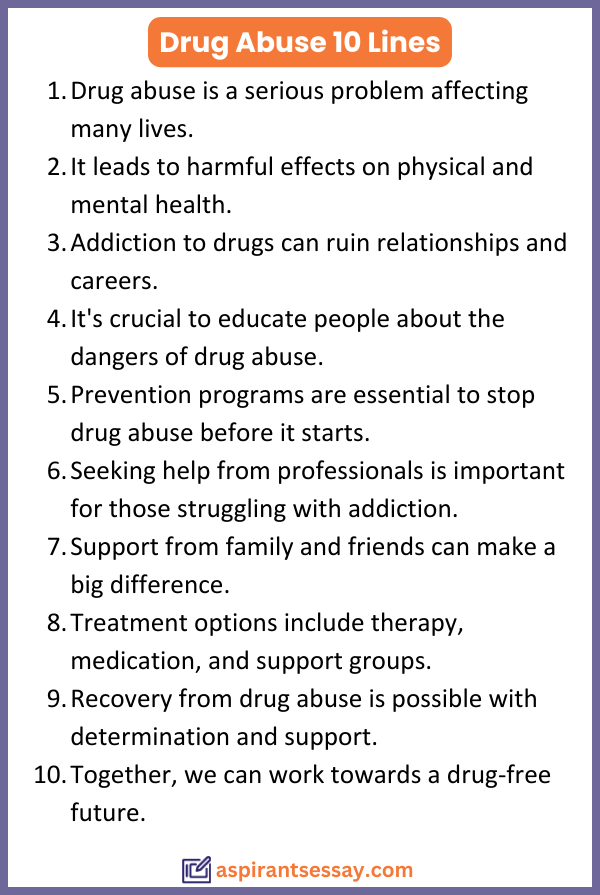
- Drug abuse is a serious problem affecting many lives.
- It leads to harmful effects on physical and mental health.
- Addiction to drugs can ruin relationships and careers.
- It’s crucial to educate people about the dangers of drug abuse.
- Prevention programs are essential to stop drug abuse before it starts.
- Seeking help from professionals is important for those struggling with addiction.
- Support from family and friends can make a big difference.
- Treatment options include therapy, medication, and support groups.
- Recovery from drug abuse is possible with determination and support.
- Together, we can work towards a drug-free future.
Drug Abuse 10 Lines: Sample 2
- Drug abuse harms individuals and communities.
- It damages health, both physical and mental.
- Families suffer when loved ones are addicted to drugs.
- Education about the dangers of drugs is crucial.
- Prevention efforts should start early, in schools and communities.
- Counseling and therapy can help those struggling with addiction.
- Support from friends and family is vital during recovery.
- Treatment options vary, from rehab centers to outpatient programs.
- It takes courage and determination to overcome drug abuse.
- Together, we can create a healthier, drug-free world.
10 Lines About Drug Abuse: Sample 3
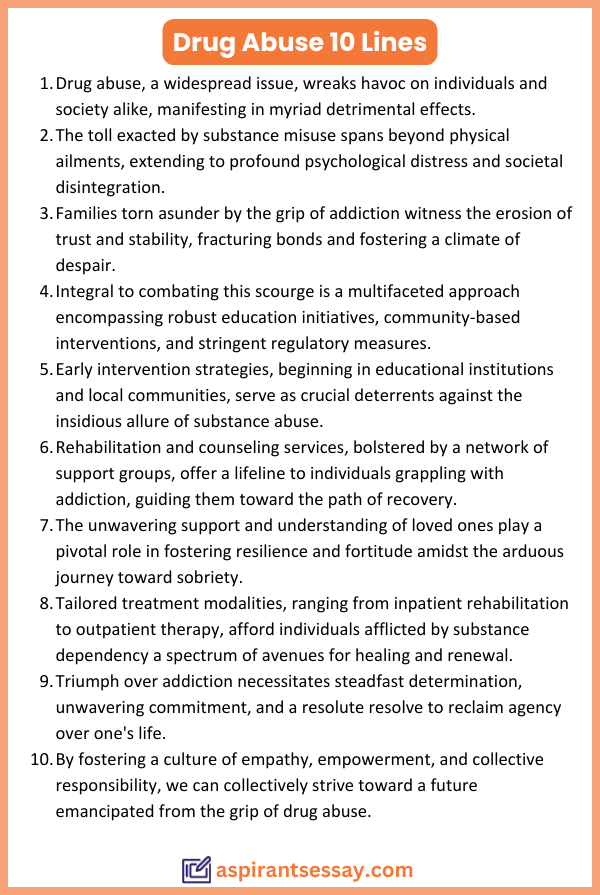
- Drug abuse, a widespread issue, wreaks havoc on individuals and society alike, manifesting in myriad detrimental effects.
- The toll exacted by substance misuse spans beyond physical ailments, extending to profound psychological distress and societal disintegration.
- Families torn asunder by the grip of addiction witness the erosion of trust and stability, fracturing bonds and fostering a climate of despair.
- Integral to combating this scourge is a multifaceted approach encompassing robust education initiatives, community-based interventions, and stringent regulatory measures.
- Early intervention strategies, beginning in educational institutions and local communities, serve as crucial deterrents against the insidious allure of substance abuse.
- Rehabilitation and counseling services, bolstered by a network of support groups, offer a lifeline to individuals grappling with addiction, guiding them toward the path of recovery.
- The unwavering support and understanding of loved ones play a pivotal role in fostering resilience and fortitude amidst the arduous journey toward sobriety.
- Tailored treatment modalities, ranging from inpatient rehabilitation to outpatient therapy, afford individuals afflicted by substance dependency a spectrum of avenues for healing and renewal.
- Triumph over addiction necessitates steadfast determination, unwavering commitment, and a resolute resolve to reclaim agency over one’s life.
- By fostering a culture of empathy, empowerment, and collective responsibility, we can collectively strive toward a future emancipated from the grip of drug abuse.
5 Lines on Drug Abuse
- Drug abuse ravages lives, leaving devastation in its wake, both physically and emotionally.
- Families shattered by addiction endure profound suffering, grappling with fractured relationships and shattered dreams.
- Prevention efforts, rooted in comprehensive education and community support, offer a beacon of hope in the fight against substance misuse.
- Rehabilitation programs, supplemented by robust counseling and therapy, provide a path to healing and recovery for those ensnared by addiction’s grasp.
- Through collective action and unwavering commitment, we can forge a future liberated from the shackles of drug abuse, fostering resilience and empowerment within our communities.
20 Lines on Drug Abuse
- Drug abuse, a complex societal issue, transcends mere individual affliction, permeating communities and undermining societal cohesion.
- Beyond its evident physical toll, substance misuse exacts a profound psychological toll, often precipitating mental health disorders and cognitive impairments.
- Studies indicate a correlation between early exposure to trauma and an increased susceptibility to substance abuse later in life.
- Moreover, genetic predispositions and environmental factors interplay, shaping an individual’s susceptibility to addiction.
- The burgeoning opioid crisis, characterized by the proliferation of prescription painkillers and illicit narcotics, underscores the urgency of addressing substance abuse.
- Notably, marginalized communities often bear a disproportionate burden of addiction, exacerbated by systemic inequities in access to healthcare and socioeconomic opportunities.
- Prevention initiatives must extend beyond traditional educational paradigms, embracing innovative strategies tailored to diverse demographic groups.
- Cultivating resilience and fostering protective factors, such as supportive familial relationships and a sense of belonging, can mitigate the risk of substance abuse.
- Early intervention programs, integrated within educational curricula, serve as vital conduits for disseminating information and promoting healthy coping mechanisms.
- Holistic treatment modalities, encompassing pharmacotherapy, psychotherapy, and peer support networks, offer a comprehensive approach to addressing addiction.
- Concurrently, efforts to destigmatize addiction and expand access to treatment are imperative in fostering a culture of inclusivity and compassion.
- Reintegration programs, facilitating the transition from rehabilitation to mainstream society, are instrumental in promoting long-term recovery and reducing recidivism rates.
- Substance abuse counselors, armed with specialized training and empathetic understanding, play a pivotal role in guiding individuals through the complexities of recovery.
- Relapse prevention strategies, tailored to individual needs and triggers, empower individuals to navigate the challenges of sobriety with resilience and self-awareness.
- Promoting a culture of responsible prescribing practices among healthcare providers is paramount in curbing the proliferation of prescription drug misuse.
- Furthermore, collaborations between law enforcement agencies and community stakeholders are indispensable in combating illicit drug trafficking and distribution networks.
- Public awareness campaigns, leveraging multimedia platforms and grassroots advocacy efforts, serve as catalysts for societal dialogue and mobilization against substance abuse.
- Peer-led initiatives, grounded in lived experiences and mutual support, foster a sense of solidarity and camaraderie among individuals in recovery.
- Embracing harm reduction principles, such as needle exchange programs and supervised injection sites, offers pragmatic solutions for minimizing the adverse consequences of substance misuse.
- Ultimately, the fight against drug abuse necessitates a concerted, multi-pronged approach, underpinned by empathy, collaboration, and a steadfast commitment to fostering wellness and resilience within our communities.